1. Introduction
Equating resilience with robustness tends to push “future city” narratives toward hardening and centralizing systems—single optimal networks, mega-structures, and highly integrated control. While such configurations may improve efficiency in normal conditions, they can amplify systemic fragility under compound disruptions, where “failure assumptions” no longer hold. In postwar reconstruction contexts, where shortages and uncertainty are persistent, the costs of single-point failures are especially severe. Contemporary frameworks instead treat resilience as the ability to resist, absorb, adapt, transform, and recover while maintaining essential functions (United Nations Office for Disaster Risk Reduction [UNDRR], n.d.).
|
2. Misconception: “If it’s robust, it’s resilient”
A city can be “strong” in a structural sense and still be vulnerable as a socio-technical system. Centralized lifelines—one trunk road, one main substation, one dominant hospital hub—often perform well until they do not. When disrupted, restoration can be slow and disruptive, producing cascading impacts across health, logistics, public trust, and economic activity. Resilience therefore requires not only strength but continuity pathways across multiple modes and actors (Rockefeller Foundation, 2015).
|
3. Redundancy: “Extra capacity” as a continuity guarantee
Redundancy means providing more than one route, asset, or operator capable of delivering a critical function. In practice, this includes layered power systems (grid + microgrids + backup), communications (fiber + mobile + satellite), and water provision (network + storage + emergency distribution). Although redundancy may appear inefficient on a narrow cost basis, it reduces the larger social and economic losses caused by extended outages—especially during reconstruction, when marginal disruptions compound rapidly.
|
4. Flexibility: Cities that can change shape
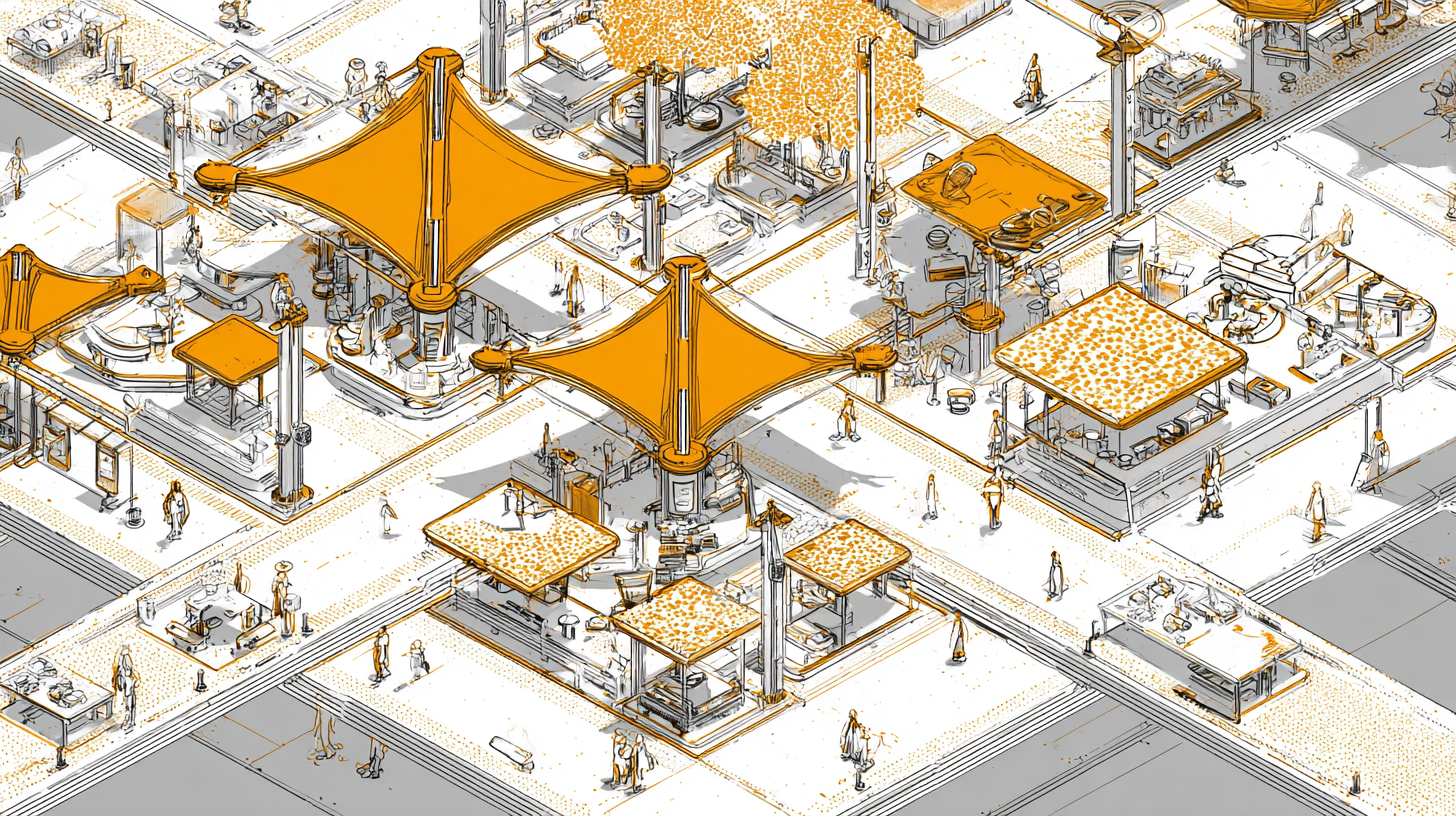
Flexibility is the capacity to reconfigure land use, public space operations, and institutional processes in response to stress. Postwar provisional housing and markets illustrate how “temporary” interventions can function as modular units that restart daily life. In future cities, plazas can shift from leisure spaces to relief distribution points; streets can shift from private vehicle priority to emergency lanes, micromobility, and last-mile logistics. This flexibility is often less about hardware and more about governance: protocols, authority, and data-sharing arrangements that enable rapid mode switching (UNDRR, 2015).
|
5. Alternatives: Multiple ways to achieve essential purposes
Alternatives refer to having more than one viable method to accomplish key urban goals such as mobility, distribution, and care. Critically, alternatives must be used in everyday routines; purely “for emergencies” options degrade without practice. Policies that support walkability, cycling networks, distributed services, and neighborhood-scale provisioning improve daily convenience while simultaneously increasing emergency readiness—capturing the thesis that future cities are built on “strong everyday life.”
|
6. Recovery Speed: Prepared recovery, not just fast construction
Recovery speed (rapidity) depends on pre-event readiness: prioritized restoration sequences, asset registries, standardized parts, mutual-aid agreements, streamlined permitting, and clear decision rights. Research on disaster resilience emphasizes preparation, absorption, recovery, and adaptive improvement as an integrated cycle rather than a post-event sprint (National Academies of Sciences, Engineering, and Medicine, 2012). Infrastructure resilience discussions similarly stress life-cycle performance and institutional capacity as determinants of rapid restoration (Organisation for Economic Co-operation and Development [OECD], 2018).
|
7. Conclusion
Resilience is not synonymous with robustness. It is a daily quality of urban systems: redundancy that prevents collapse, flexibility that enables reconfiguration, alternatives that keep functions running, and recovery speed enabled by prepared governance and design. Postwar reconstruction implicitly teaches that the most resilient cities are not those that never break, but those that keep everyday life going and return quickly—often improving in the process.
|