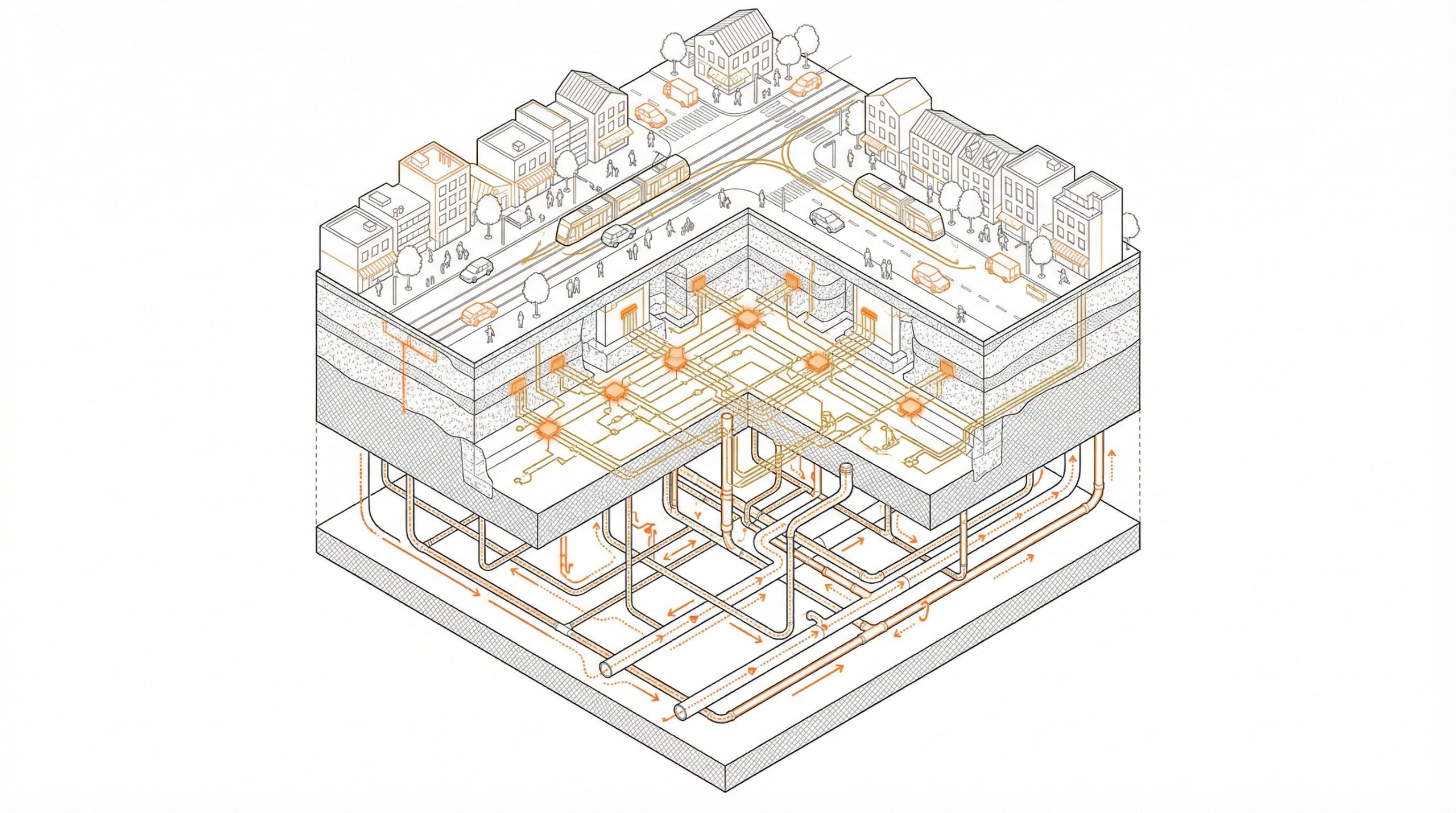
Postwar reconstruction is often framed as a technical project—restoring damaged infrastructure and rebuilding housing—yet its most persistent bottlenecks are political and legal. In practice, reconstruction frequently requires the reconfiguration of property rights, land boundaries, compensation rules, and relocation pathways. These issues are difficult not because stakeholders are irrational, but because reconstruction decisions produce uneven and often irreversible impacts on livelihoods, business continuity, community ties, and long-term asset values. This manuscript argues that “boundary → rights → compensation → relocation” forms a causal chain that can stall entire schedules: when boundaries cannot be confirmed, land acquisition, land readjustment, and compensation valuation are delayed, producing cascading uncertainty and distrust. Compensation disputes are rarely about price alone; they also hinge on legitimacy, transparency, and the perceived fairness of procedures—especially when losses such as downtime, social fragmentation, or cultural attachments cannot be reduced to unit costs. Relocation further amplifies conflict by revealing heterogeneity across households (owners vs. tenants, elderly households, mixed-use properties, shared ownership, unresolved inheritance), turning a binary “support/oppose” debate into a complex negotiation about conditions and feasibility. To address these dynamics, the paper proposes a stakeholder mapping method that decomposes “residents” into rights-based categories and plots conflict likelihood along five axes: burden, benefit, time horizon, bargaining power, and reversibility. The method helps practitioners identify “conflict intersections,” such as high-burden/low-benefit parcels (e.g., small corner shops affected by road widening) or high-uncertainty/high-impact cases (e.g., unclear boundaries and shared ownership) that freeze overall progress. Finally, the paper reframes smart-city technologies not as instruments of surveillance or efficiency alone, but as tools to reduce negotiation friction—through rights visualization, standardized scenario comparison, and administrative modularization of title and registration work—thereby accelerating recovery while reducing social fragmentation.