—How Color, Materials, Outdoor Advertising, and Night Lighting Shape Return and Investment—
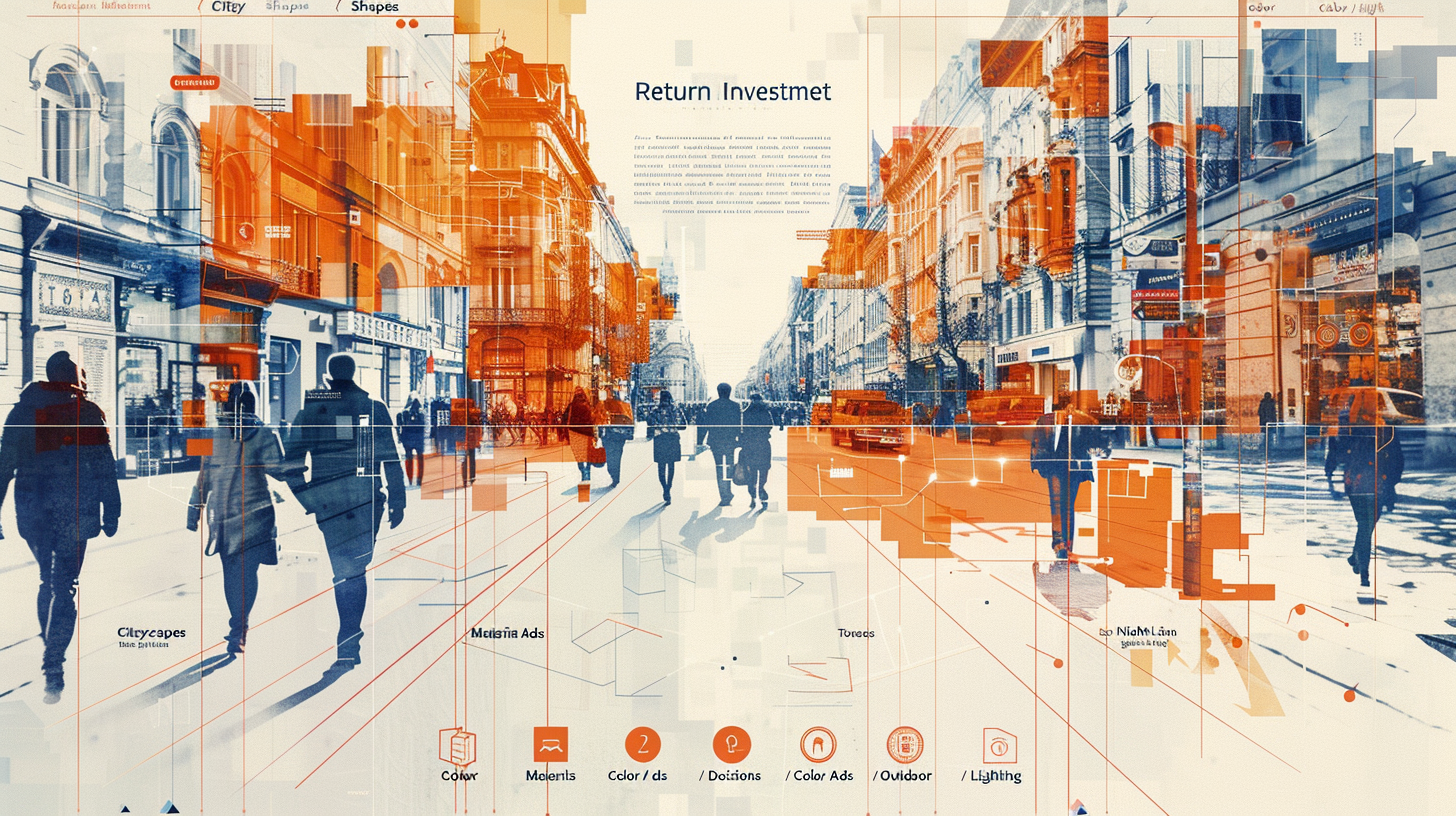
In post-disaster and post-war reconstruction, lifeline systems—water, electricity, transport, housing, medical care, and security—naturally take priority. Cityscape design is often dismissed as a luxury to be addressed later. Yet the recovery of a city does not end when infrastructure returns. A city truly reboots only when residents decide to come back, businesses reopen, firms invest, and public finance and services begin circulating again. These decisions are not driven by engineering capacity alone; they are shaped by visible order and confidence in the urban environment. This article reframes cityscape not as decoration, but as decision-making infrastructure that quietly influences return and investment.
Drawing on lessons from post-war urban reconstruction, three strategic patterns help explain how cityscape functions. First, the “symbolic axis” approach—exemplified by Hiroshima—creates a spatial framework that holds mourning and future orientation together. By making values legible in space, a symbolic core provides a reason to return and a narrative that invites external attention without reducing the city to spectacle. Second, the “historic reconstruction” approach—exemplified by Warsaw’s Old Town—rebuilds an urban home as an act of continuity and resistance against rupture. This form of reconstruction supplies citizens with a recognizable place to belong, while also offering an outward-facing image that allows the city to “reintroduce” itself to the world. Third, the “modern renewal” approach—often associated with Rotterdam—treats reconstruction as a chance to promise a better everyday life rather than a return to the past. Pedestrian-oriented centers, clear spatial organization, and coherent commercial continuity reduce uncertainty for investors and improve the feasibility of economic recovery.
Across these patterns, the mechanism is consistent. For residents, cityscape reduces the psychological cost of returning by reinforcing safety, pride, and a believable outlook for daily life. For investors and business owners, cityscape reduces uncertainty through visible rules, recognizable urban identity, and improved prospects for revenue—particularly through increased pedestrian circulation and longer dwell times. The article argues that a workable cityscape agenda is not an imposition of taste but a design of rules and operations. Practically, color planning should define acceptable ranges rather than enforce rigid uniformity; material choices should incorporate maintenance, durability, and supply stability as core cityscape criteria; outdoor advertising should be regulated in two steps—minimum safety standards in the emergency-to-transitional phase, followed by district-specific norms in the permanent phase; and night lighting should be layered into safety lighting, activity lighting, and symbolic lighting so that public security, nighttime economy, and civic narrative can coexist. Ultimately, the “beauty” worth debating in reconstruction is not ornamental refinement but urban dignity and predictability—an ethical and operational framework that allows a city to move forward while carrying loss. Cityscape is not the final flourish of recovery; it is an early design condition that accelerates return and investment.
1. Cityscape as “Decision Infrastructure,” Not a Luxury
It is understandable that cityscape discussions can feel inappropriate in the immediate aftermath of destruction. But a city’s recovery depends on reconnecting two circuits: psychology and capital. People do not return for safety alone; they return for dignity, belonging, and a credible outlook for tomorrow. Firms do not invest out of goodwill; they invest where rules are legible, risks are manageable, and the city can articulate a future. Cityscape embeds this legibility into the urban environment itself.
2. Three Post-War Patterns of Cityscape Strategy
Post-war reconstruction suggests three useful patterns:
Symbolic Axis: A spatial core that makes civic values visible, holding memory and future together (e.g., Hiroshima).
Historic Reconstruction: Rebuilding a recognizable “home” to restore continuity and belonging (e.g., Warsaw Old Town).
Modern Renewal: Implementing a promise of a better everyday life—often through walkable centers and clear urban organization—to reduce investment uncertainty (e.g., Rotterdam).
The key question is not which pattern is “correct,” but how a city edits its identity: what it preserves, updates, and symbolically anchors.
3. Color, Materials, Advertising, and Light: The Operable Toolkit
The core issue is not subjective beauty but operability.
Color: Build agreement through acceptable ranges—base tones, accent zones, and clearly defined exclusions—rather than rigid uniformity.
Materials: Treat procurement stability, ease of repair and cleaning, and tolerable aging as central cityscape conditions.
Outdoor Advertising: Use a two-step approach—minimum safety and pedestrian-clearance rules in emergency/transitional phases, then district-based controls for size, height, luminance, flashing, and placement in permanent phases.
Night Lighting: Layer lighting into safety, activity, and symbolic tiers so security, nighttime economy, and civic narrative reinforce rather than contradict each other.
4. Conclusion: “Beauty” as Urban Dignity and Predictability
The goal of reconstruction cityscape is not to decorate tragedy. It is to translate dignity and a flexible form of predictability into spatial rules that people and capital can read. Cityscape is not the final luxury of recovery. It is an early design condition that accelerates return and investment.
Reference (main)
- European Space Agency. (2022, October 25). Berlin at night – A decade of changes in street lighting.
- Ginza Machidukuri Council & Ginza Design Council. (2021, February 1). Ginza Design Rules – Third Edition (Responsible editors and publication information).
- Hiroshima City. (2026). Hiroshima akari no shakai jikken [Lighting social experiment brochure] .
- Maki, R. (2020). Landscape design in Hiroshima Peace Memorial Park: Transition of the design by Kenzo Tange. (DOI: 10.1002/2475-8876.12136).
- Ministry of Land, Infrastructure, Transport and Tourism. (2021). Study on feasibility of introducing project schemes for Peace Boulevard forming an urban core corridor .