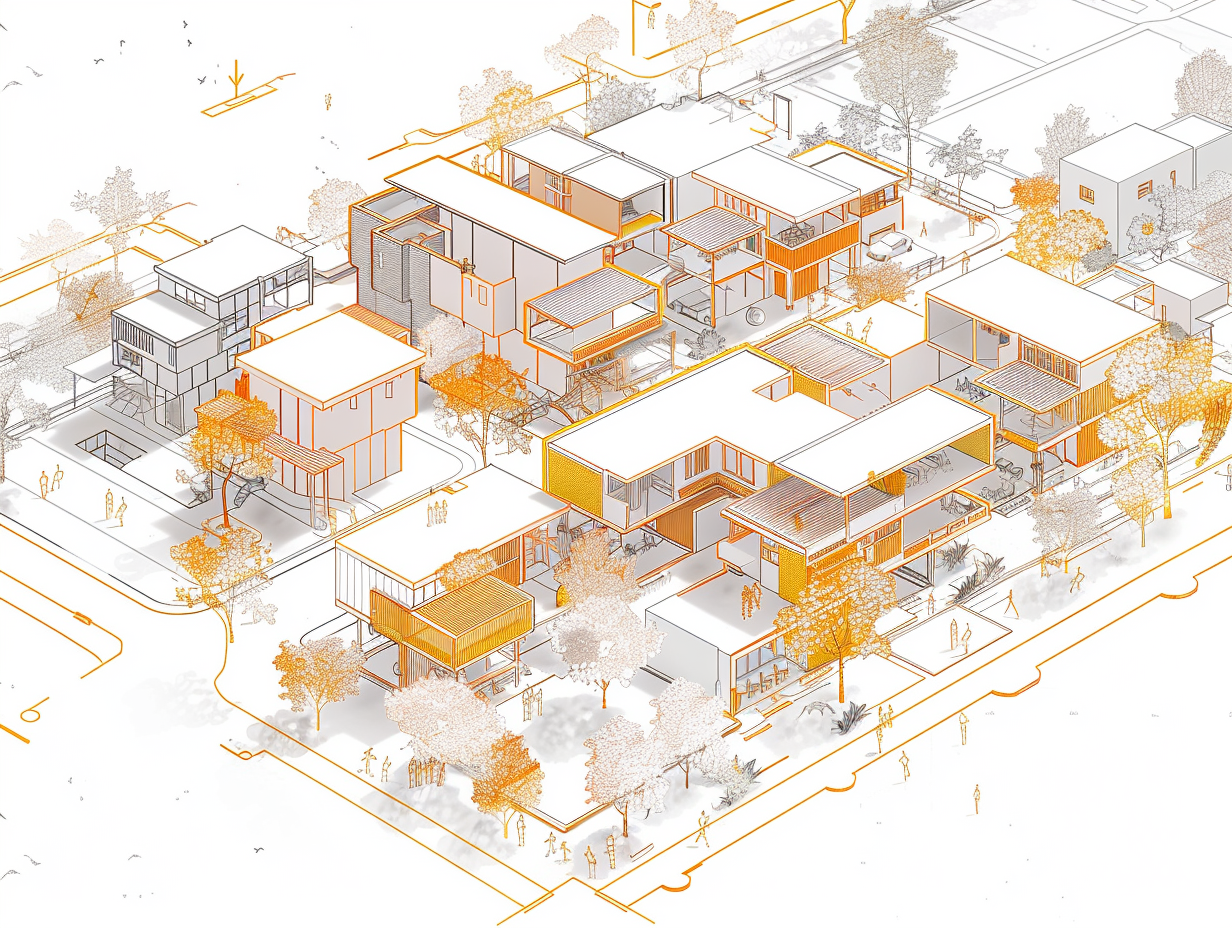
Post-war reconstruction has long been framed as a problem of housing and infrastructure provision. Yet field evidence from major disasters shows that the decisive bottleneck is logistics: the ability to restore continuous flows of relief supplies, fuel, medical goods, construction materials, skilled labor, and operational information. When these flows stall, debris removal, temporary housing, and permanent rebuilding all slow or stop. This article reframes logistics as core urban infrastructure and translates lessons from Japanese disaster response into an actionable design agenda for “future cities.” It argues that resilient recovery requires redundancy across modes (ports, rail, roads, and aviation), not single-corridor dependence, and that cities must be planned for rapid pivot from efficiency-optimized, just-in-time operations to surge-oriented emergency distribution. The paper proposes five design priorities: (1) protect the recovery “gateway” by embedding port business continuity into facility and hinterland plans; (2) reposition rail corridors and stations as material arteries, enabling temporary freight handling and transfer; (3) secure emergency road networks as a mesh, hardening chokepoints such as bridges and intersections and predefining traffic control for the last kilometers; (4) design logistics hubs for throughput, separating high-handling facilities from high-storage facilities and ensuring power, communications, sanitation, and worker support; and (5) treat information as an urban operating system by integrating demand, inventory, and route status to reduce mismatch. By centering logistics in reconstruction planning, cities can accelerate recovery while strengthening everyday competitiveness and investment attractiveness. The framework applies to post-war rebuilding and contemporary crises, offering checklists and metrics for designers and operators.
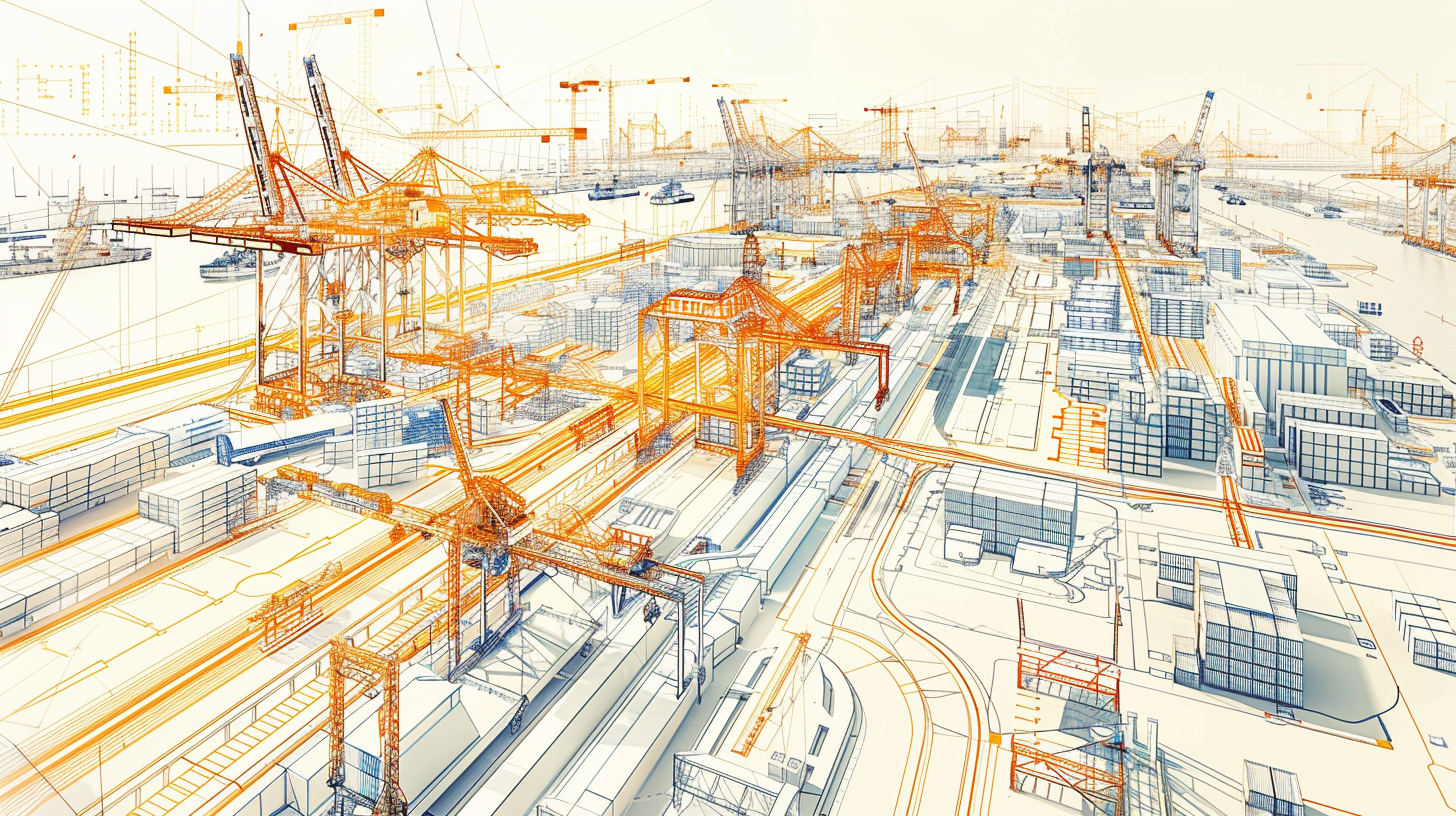
1. Introduction: Reconstruction Stops When Flows Stop
Reconstruction is not sustained by construction capacity alone. It depends on whether goods, people, and information can re-enter the city reliably. If food, water, fuel, medical supplies, construction materials, skilled labor, and operational updates cannot circulate, the entire recovery pipeline—debris clearance, temporary settlement, and permanent rebuilding—stalls.
This article treats logistics as an urban “lifeline” infrastructure, reframing it from a back-office function into a primary design variable for reconstruction and future-city planning.
2. Logistics as Urban Infrastructure, Not “Just Transport”
Emergency logistics differs from peacetime optimization. Highly lean systems—single-mode dependence, tight inventories, just-in-time replenishment—can fail abruptly when roads are severed, fuel is constrained, or handling facilities are damaged (e.g., port equipment and warehouses). Research on Japanese disasters underscores the need for multi-modal readiness and reconsideration of extreme inventory minimization during crises (J-STAGE, n.d.).
A logistics-first reconstruction approach focuses on:
- Redundancy: multiple viable routes and modes
- Throughput: the ability to sort, transship, and distribute rapidly
- Operating rules: traffic control, priority allocation, and shared information
- Rapid pivots: switching from “efficiency” to “surge distribution”
3. Ports: Keeping the Recovery Gateway Open
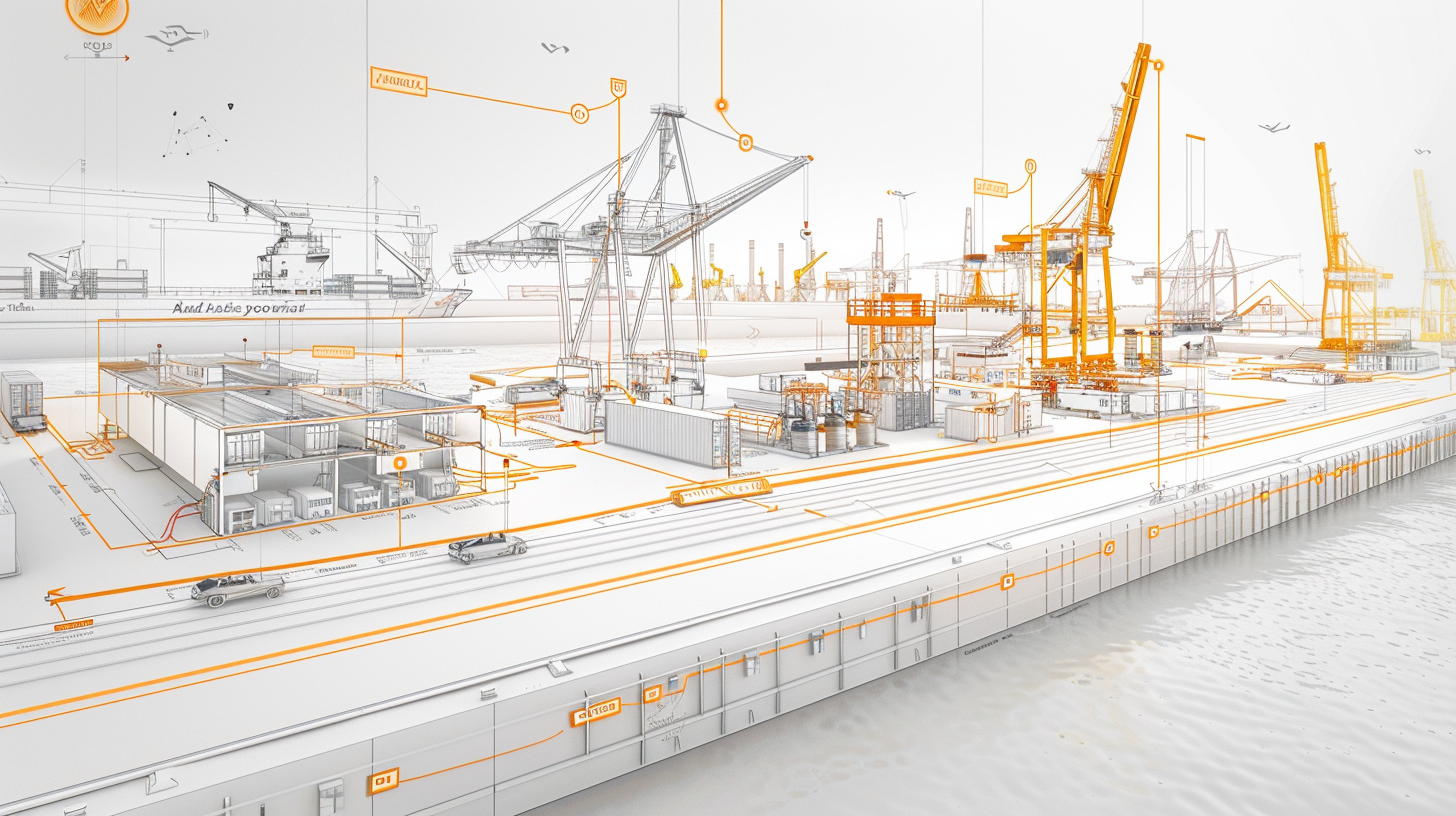
In large-scale disasters, land routes congest early; maritime transport can deliver large volumes, but only if berthing, handling, power, and hinterland connections remain workable. Japanese port governance emphasizes planning business continuity and defining priority restoration for core berths, power supply, equipment, and yard operations (Miyagi Prefecture, n.d.).
Design implications:
- Embed port BCP into spatial plans: identify “must-recover-first” components and pre-approve emergency layouts.
- Plan inter-port substitution: do not bet recovery on one harbor; pre-assign roles among neighboring ports.
- Strengthen port–inland links: yard space and short-haul connectors must support fast onward distribution.
4. Rail: Repositioning Corridors as Material Arteries
Rail is often treated as a commuter utility, but it can function as a high-capacity backbone for reconstruction materials and fuel. Disaster logistics documentation in Japan shows combined use of trucking, rail, maritime, and air modes for emergency movement (Cabinet Office, n.d.).
Design implications:
- Enable temporary freight handling at select stations/yards.
- Ensure station districts can accommodate heavy vehicle access and safe loading zones.
- Create “switchable” urban interfaces where passenger spaces can temporarily support material transfer.
5. Roads: Protecting Emergency Networks as a Mesh
Roads remain essential for last-mile distribution, but reliance on a single corridor is fragile. National guidance highlights the criticality of securing emergency transport routes and improving redundancy at the network level (Cabinet Office, n.d.).
Design implications:
- Designate emergency routes plus alternates (a network, not a line).
- Harden chokepoints: bridges, embankments, intersections, and grade separations.
- Predefine last-mile operations: one-way controls, vehicle segregation, and curb management for hubs-to-shelter delivery.
6. Warehouses and Hubs: Separate Storage From Handling
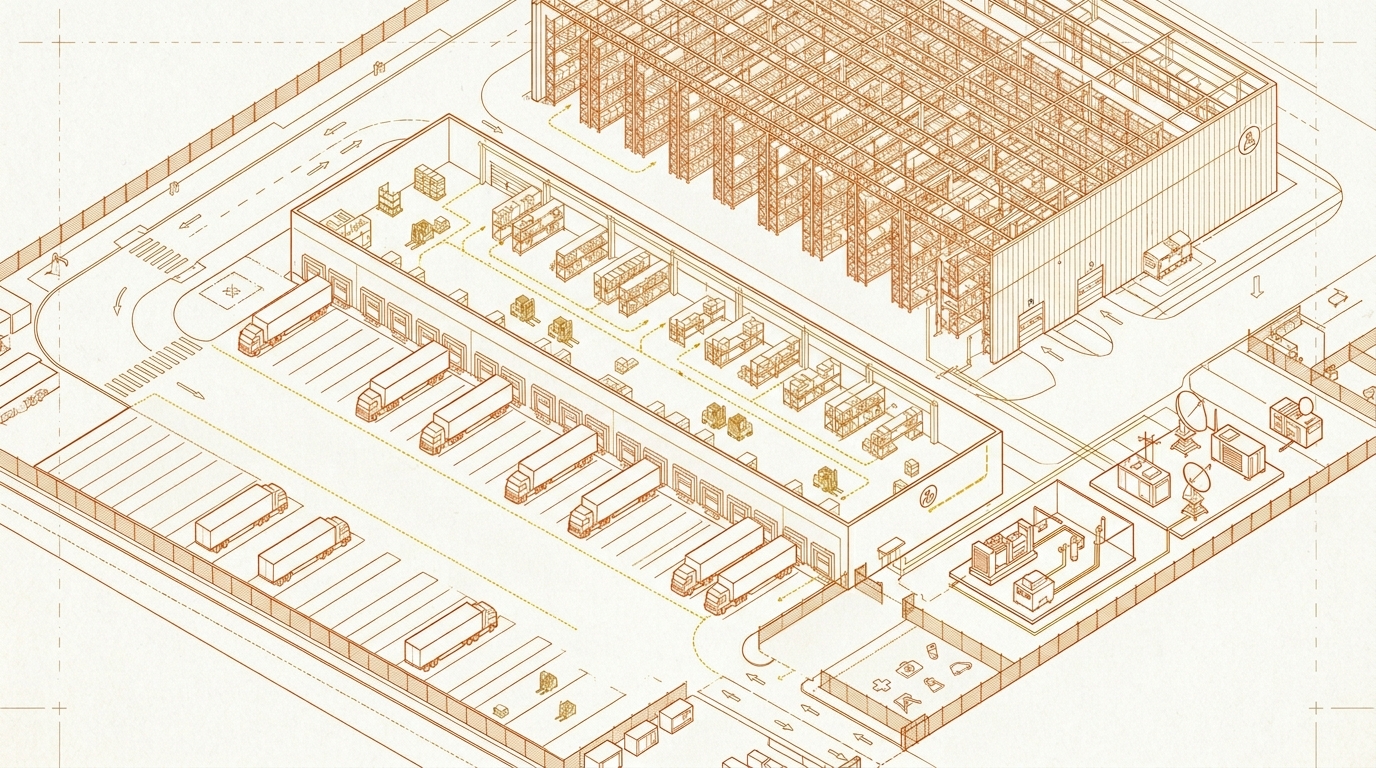
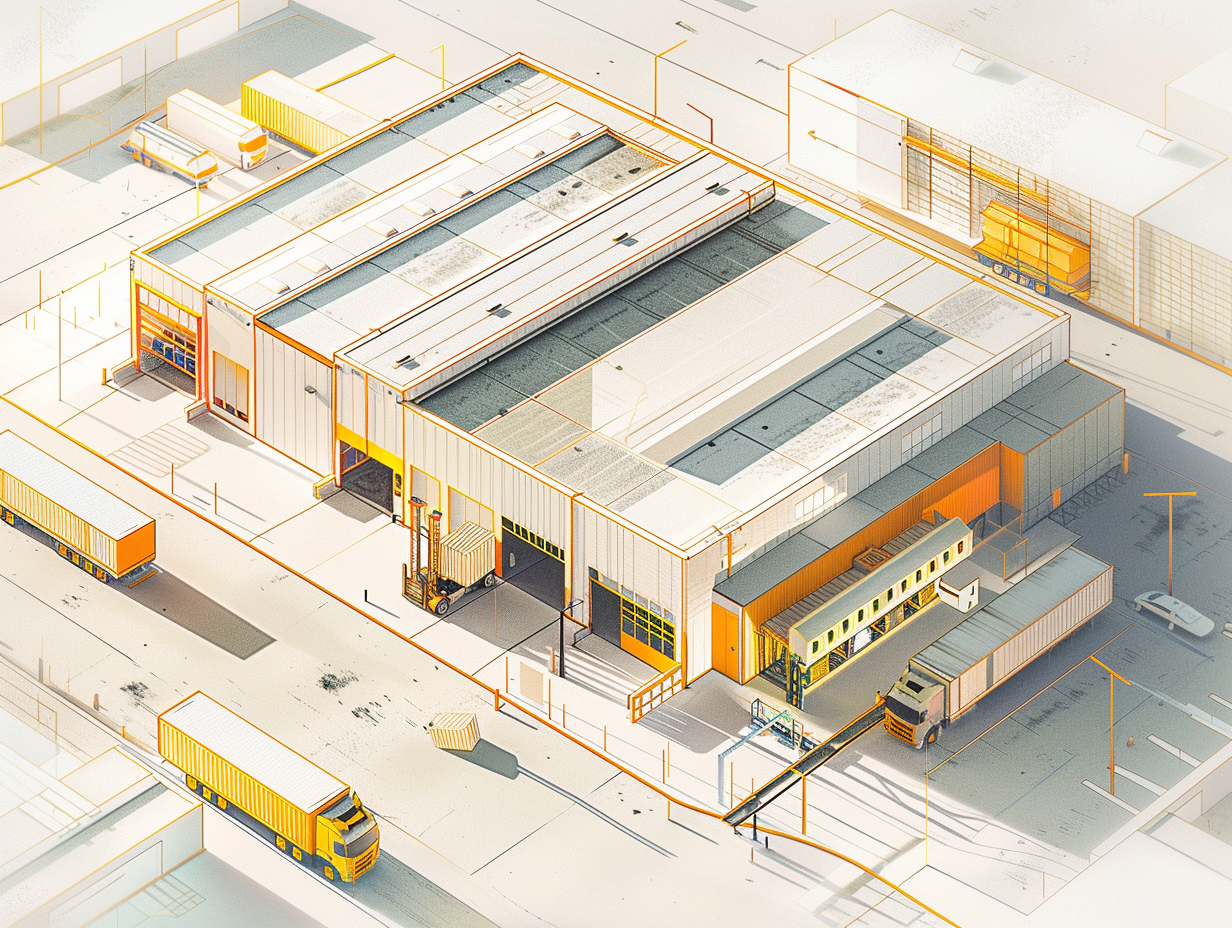
Bottlenecks often arise not from lack of space but from lack of handling capacity—the ability to receive, sort, stage, and dispatch. Japanese logistics guidance distinguishes facilities optimized for high handling/low storage from those optimized for high storage/lower handling, with site selection tied to emergency route access and hazard exposure (MLIT, n.d.).
Design implications:
- Plan dual-typed hubs (throughput hubs vs. storage depots).
- Provide resilient enablers: power, communications, lighting, sanitation, worker rest areas.
- Treat hubs as “operational architecture,” not just floor area.
7. Information: The Urban Operating System for Recovery Logistics
A core enemy of emergency logistics is not only shortage but mismatch—the wrong goods at the wrong place. Japan’s “push-type” support and efforts to integrate needs, inventory, and transport status illustrate the shift toward information-driven distribution (Government Public Relations Online, n.d.).
Design implications:
- Integrate demand signals (shelters/clinics/sites), hub inventory, and route status.
- Design for field input under staffing constraints (simple interfaces, minimal overhead).
- Make logistics visibility part of the city’s operational governance.
8. Conclusion: A City That Receives Supplies Recovers Faster—and Competes Better
Reconstruction speed is determined by whether the system can receive, process, and distribute resources continuously. A logistics-centered city links: ports (entry) → rail/roads (backbone) → hubs (transshipment) → last mile (distribution) → information (synchronization). Designing these layers as a coherent system increases crisis resilience while improving everyday economic strength.
Reference (main)
Cabinet Office, Government of Japan. (n.d.)..
Ministry of Land, Infrastructure, Transport and Tourism (MLIT). (n.d.).
MLIT disaster logistics hub handbook.