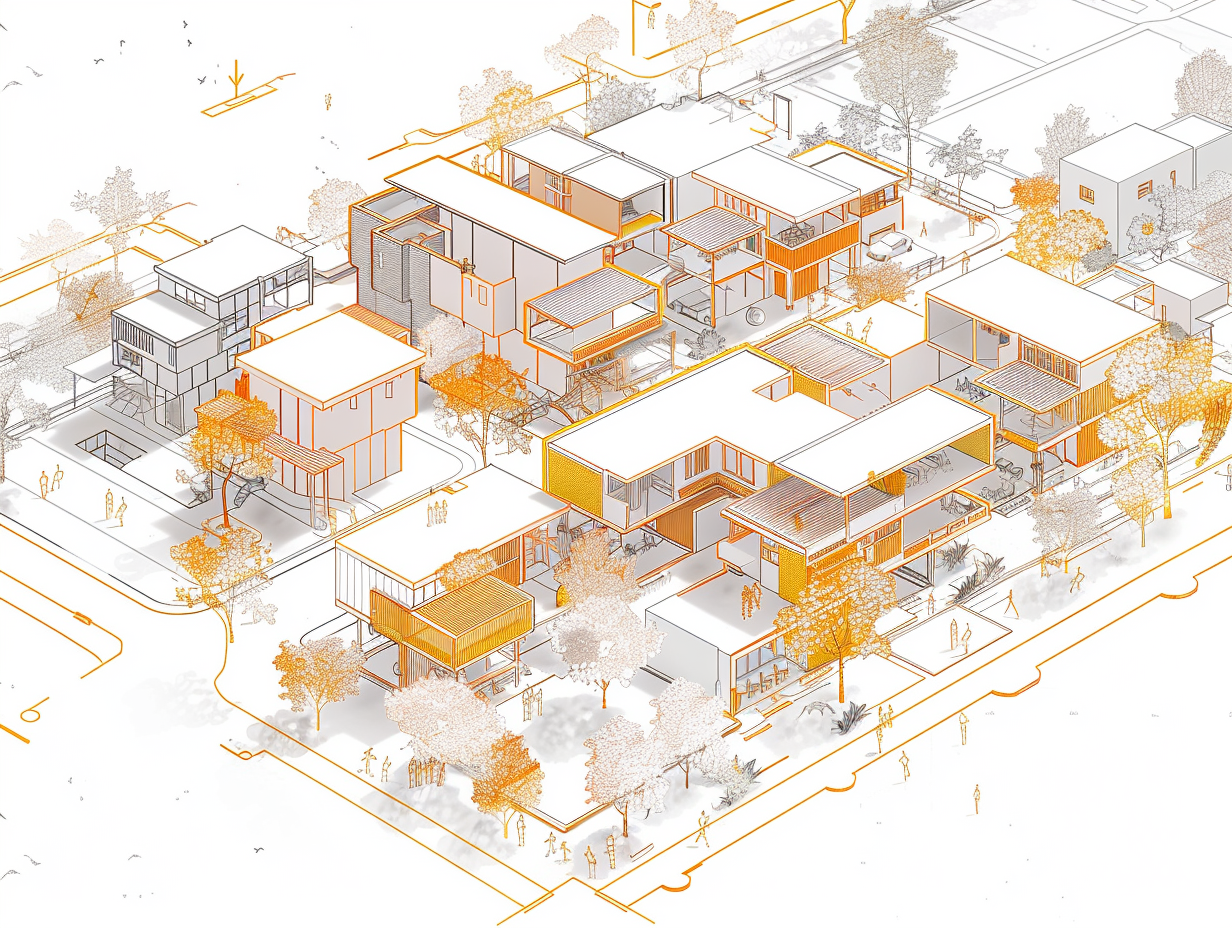
Temporary housing is designed as a short-term emergency measure, yet major disasters repeatedly turn it into a multi-year living condition. When temporary residence extends beyond its assumed timeframe, risks compound: social isolation and “kodokushi” (dying alone), deterioration in physical and mental health, and stalled livelihood recovery due to disrupted access to work, education, and care. This article reframes temporary housing as a “prototype neighborhood” for future urban living—an applied testbed where modular building systems, health-oriented spatial planning, and community-support services can be integrated from day one. Drawing on evidence from Japanese post-disaster studies and policy materials, we propose a transition-oriented design framework that treats temporary housing not as a disposable product, but as a life-course infrastructure that can be upgraded and partially transferred into permanent housing. The framework includes: (1) reusable modular components that migrate from temporary units into permanent stock; (2) a central commons hub that combines governance, social connection, and basic health services; (3) “health by circulation,” embedding micro-walk loops, shaded rest points, and routine outreach into daily paths; (4) on-site work and learning capacity to reduce commuting burdens and accelerate economic reactivation; and (5) staged transition menus that make pathways from temporary to semi-permanent to permanent housing legible and actionable. By designing for long duration and for continuity across housing phases, temporary settlements can become laboratories for resilient, human-centered “future city” practices rather than symbols of prolonged displacement. Such an approach also supports data-informed coordination among municipalities, NGOs, and residents, improving equity and sustained trust during recovery.

1. Introduction
Temporary housing is typically planned as an emergency, time-limited solution. In practice, however, large-scale disasters frequently prolong displacement due to land constraints, reconstruction capacity limits, cost inflation, and slow consensus-building among stakeholders. Japanese policy materials explicitly note that temporary housing may exceed expected provision periods and require additional compliance and planning to sustain livable conditions (Cabinet Office, Disaster Management, n.d.). (bousai.go.jp)
This mismatch—short-term intent versus long-term reality—creates a structural design problem. When “temporary” becomes “semi-permanent,” settlements must function as full neighborhoods: sustaining community ties, safeguarding health, and supporting livelihoods. The central claim of this paper is that prolonged temporary housing can be reframed as a deliberate experimental platform for “future housing” and “future city” practices—if, and only if, the transition from temporary to permanent living is designed as a coherent pathway rather than a series of ad hoc fixes.
2. What Prolonged Temporary Living Damages: Community, Health, and Livelihood
2.1 Community: Isolation, weakened social networks, and risk concentration
Empirical work on Japanese temporary housing documents substantial rates of social isolation. In a case study of Fukushima evacuees, Shoji and Akaike (2018) report that many residents had few or no conversational partners shortly after moving in, and some remained isolated later. (経済研究)
Isolation is not merely a “social” issue; it becomes a safety and governance issue, affecting the visibility of needs and the effectiveness of outreach. More recent research on kodokushi in temporary housing stresses that settlement size, dispersion, and local conditions shape social contact opportunities and the progression of isolation—implying that spatial and management choices are policy levers, not afterthoughts (Tanaka, 2024). (J-STAGE)
2.2 Health: physical and mental outcomes linked to housing form and displacement duration
Post-disaster health risks persist beyond the acute phase. A national resilience briefing highlights elevated risks for major conditions (e.g., pneumonia and cardiovascular events) and emphasizes the importance of infection prevention, inactivity prevention, and mental health support across recovery phases (Tsuji, n.d.). (內閣府)
Long-term residence in temporary housing is also associated with lifestyle deterioration. Evidence from health-check data suggests prolonged temporary living can increase stress and worsen habits, contributing to obesity and related risks (Konno, n.d.). (JSOMT)
On mental health, population-based analyses show that living in prefabricated or privately rented temporary housing can be associated with psychological distress years after disasters (Morishima et al., 2020). (PMC) A related longitudinal study reports that adults living in temporary housing for extended periods after the 2011 Great East Japan Earthquake faced heightened risks of common mental disorders (Kawakami et al., 2020). (PMC)
2.3 Livelihood: “housing-only” thinking slows recovery
When temporary settlements are distant from employment, education, childcare, and healthcare, the burden of mobility rises and re-employment becomes harder—especially for older adults, caregivers, and people with chronic conditions. The result is a feedback loop: reduced income, declining health, and further social withdrawal. This is why temporary housing must be treated as a life-system rather than a shelter product.
3. Reframing Temporary Housing as a “Living OS”
Architectural and planning research warns that prolonged temporary residence produces both visible “hard” problems (deteriorating building stock) and less visible “soft” problems (shrinking support networks, declining participation, and weakening community functions) that can be hard to detect until they become severe (Architectural Institute of Japan, n.d.). (人工智慧新聞)
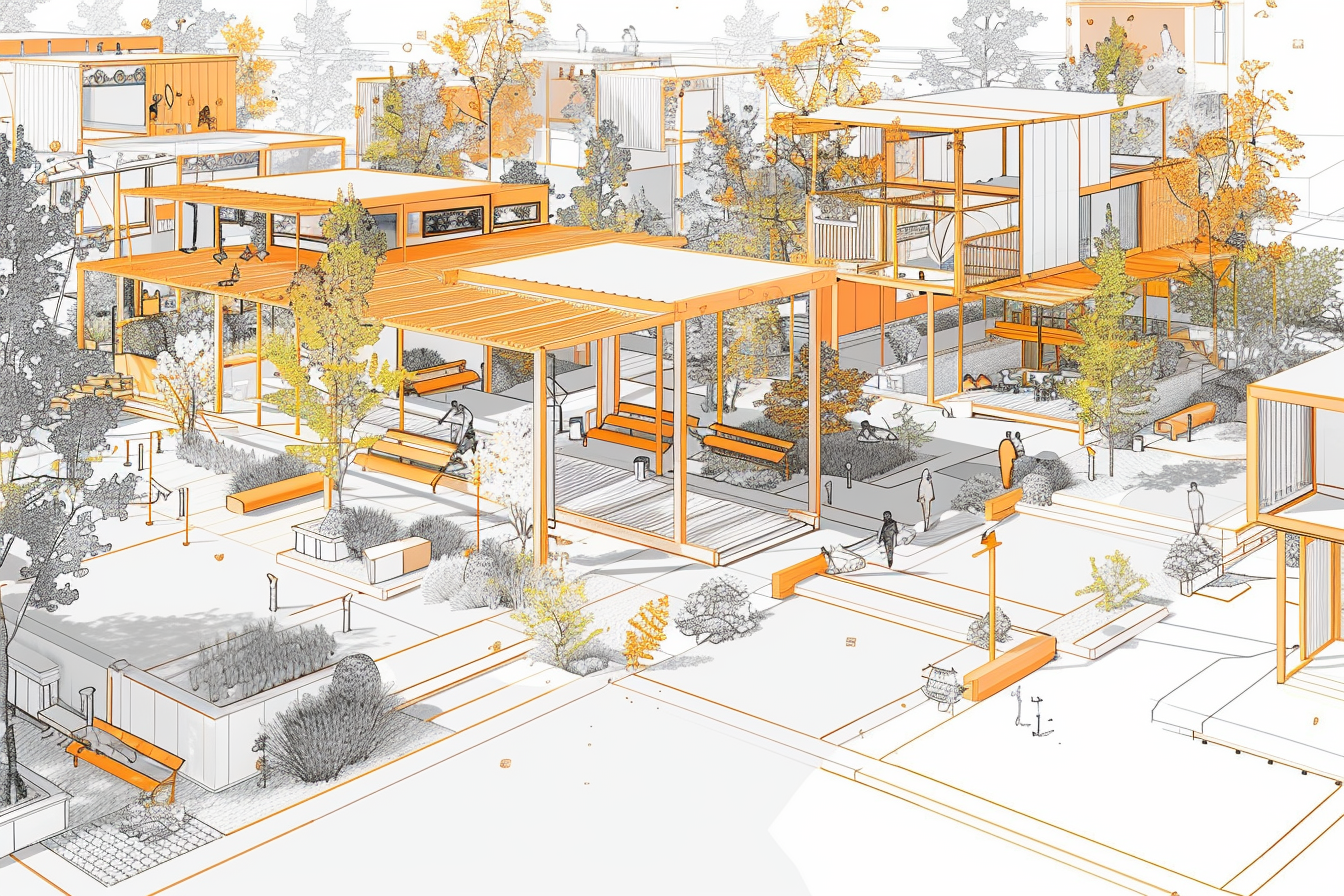
Accordingly, this article proposes a shift in design object:
- From units → to neighborhood operating capacity
- From short-term compliance → to long-duration livability
- From end-of-life demolition → to component migration and reuse
This reframing aligns temporary housing with “future city” aims: modularity, circular material flows, preventative health design, and service integration.
4. A Transition-Oriented Design Framework: Five Proposals
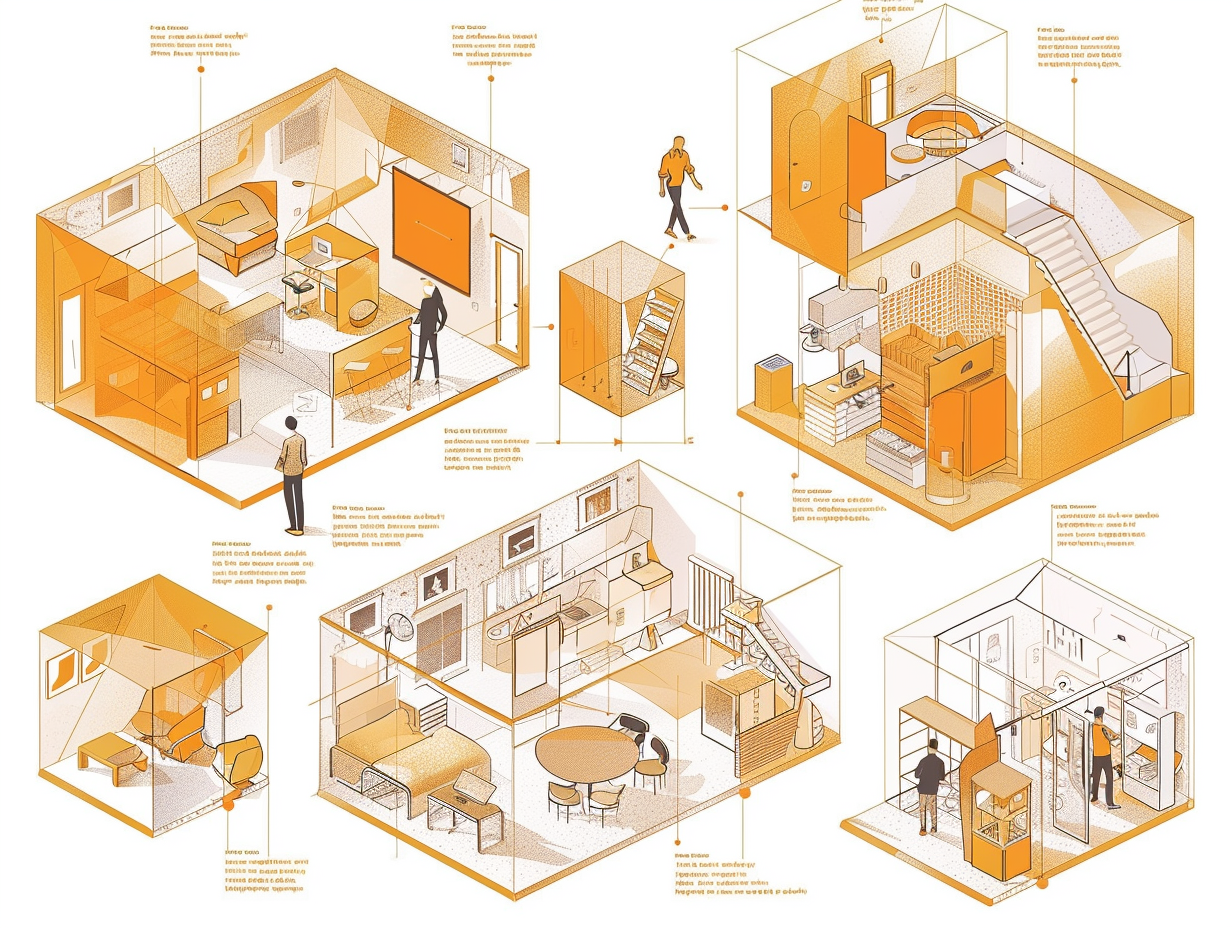
Proposal 1: Modular components designed for migration into permanent housing
Investments in insulation, ventilation, wet-area cores, storage, and accessibility features are often judged “wasteful” if temporary housing is demolished. A migration-first strategy treats these elements as reusable modules that can be transferred into permanent stock (e.g., reconstruction public housing), lowering long-term costs and raising immediate living standards.
Proposal 2: A central “Commons Hub” combining governance, connection, and basic health access
Instead of a single-purpose assembly room, the settlement core should function as a multi-service node: resident coordination, consultations, rotating clinics, information, charging/power, and outreach staging. Evidence on isolation suggests that reducing friction for contact and help-seeking is essential (Shoji & Akaike, 2018). (経済研究)
Proposal 3: Health-by-circulation—embedding preventive health into daily movement
Health protection should be designed into paths: micro-walk loops, shaded benches, barrier-free routes, lighting, and clear wayfinding to reduce inactivity and support mental stability. Policy guidance emphasizes prevention of inactivity and mental health support as central recovery tasks (Tsuji, n.d.). (內閣府)
Proposal 4: Building “work-and-learn capacity” into the settlement
A small fraction of the site (even ~10%) can host flexible work and learning functions: light production, repair workshops, shared kitchens, remote-work booths, childcare-linked micro-jobs, and training. This reduces mobility burdens and accelerates livelihood restart—critical when external job markets and transport are disrupted.
Proposal 5: A staged transition menu that makes “temporary → permanent” legible
Residents face repeated high-stakes decisions under stress. A transition menu clarifies options and triggers across three phases:
- Upgraded temporary (immediate livability)
- Semi-permanent (medium-term stability, service anchoring)
- Permanent (tenure security, asset rebuilding)
International evidence also shows that stable housing can take years to achieve after catastrophic events, supporting the need for explicit, multi-stage planning rather than optimistic timelines (Merdjanoff et al., 2022). (journals.ametsoc.org)
5. Discussion: From “Prolonged Displacement” to “Resilient Prototyping”
Japan’s experience with kodokushi triggered iterative improvements in management, services, and design of temporary housing, illustrating how settlement operations can evolve to address isolation risk (Bris et al., 2019). (MDPI) The lesson for “future city” thinking is not to romanticize temporary life, but to institutionalize learning: treat each temporary settlement as a pilot for scalable neighborhood systems—health-oriented circulation, service hubs, modular reuse, and livelihood integration—while tracking outcomes and equity impacts.
6. Conclusion
Temporary housing will continue to be necessary, and it will continue to last longer than planned in many disasters. Designing as if it will remain short-term creates predictable harm. Designing for duration and for continuity across phases turns temporary settlements into practical laboratories for resilient, human-centered urbanism—where the pathway from temporary to permanent living is not accidental, but intentionally engineered.
Reference (main)
Architectural Institute of Japan. (n.d.). Long-term evaluation of living environment in temporary housing (jtk_2015009) .
Bris, P., Bendjebbar, A., & Lannoy, A. (2019). Impact of Japanese post-disaster temporary housing and the evolution of “kodokushi” prevention (International Journal of Environmental Research and Public Health, 16(23), 4757.
Cabinet Office, Government of Japan, Disaster Management. (n.d.). Issues for securing housing for disaster victims.
Kawakami, N., et al. (2020). Onset and remission of common mental disorders among adults living in temporary housing for three years after the 2011 Great East Japan Earthquake.